
Active Missouri Warrant Records
Missouri judges issue arrest warrants, bench warrants, search warrants, and other custody or appearance orders within the cases before them. The Circuit Court includes circuit, associate, probate, family, juvenile, and municipal divisions, so the issuing office can be a Circuit Clerk or a municipal division clerk. Sheriffs and police agencies execute warrants and maintain operational information. A public court docket may record “warrant issued,” “served,” “recalled,” or “quashed,” but the latest court entry is only part of the status check.
Missouri law enforcement uses restricted MULES and NCIC-connected systems to exchange operational warrant data. Those networks are not public self-search portals. Public lists, when offered, come from a county sheriff, police department, prosecutor, or municipal court and vary in coverage and refresh timing. Some show only selected active warrants or most-wanted subjects. Use the Missouri county directory to identify the Circuit Clerk, sheriff, and relevant city court, then call an official number to confirm current status.
Public search limit: Case.net and local lists are useful leads, but only the issuing court and operational warrants unit can confirm active status.
Types of Missouri Warrants
The document type controls what can be searched and disclosed. An arrest warrant rests on a criminal accusation and judicial probable-cause determination. A bench warrant commonly follows a missed appearance or violation of a court order. Search warrants focus on evidence and may remain sealed before execution. Other orders can direct custody or appearance without being ordinary criminal arrest warrants.
- Arrest warrant: a judicial command to arrest based on a criminal accusation and probable cause.
- Bench warrant: an order often issued after failure to appear, contempt, a probation matter, or violation of another court command.
- Search warrant: authority to search a person, place, device, or data for described evidence; the application can be sealed before execution.
- Capias or writ: an order directing custody or appearance, with meaning that depends on the case and text.
- Fugitive hold: another jurisdiction's request tied to extradition or transfer, which must be verified with the holding and demanding agencies.
- Civil attachment: an appearance or compliance order that should not be called a criminal warrant without reading the court record.
Search Missouri Warrant Records
Begin with every plausible venue. Consider the county of the alleged offense or arrest, the Circuit Court that holds the criminal case, any city whose traffic or ordinance ticket is involved, and a court supervising probation. A municipal bench warrant may not appear on a sheriff felony list. Search Missouri Case.net by exact name and, when available, case number. Read later entries after any warrant event because service, recall, quash, bond, or disposition can change its meaning.
Collect the legal name, date of birth, aliases, case or warrant number, likely court, and charge date before calling. Compare details rather than relying on a name alone. Navigate independently to an official government or courts.mo.gov page for the phone number. Ask whether the warrant remains active, which court controls it, whether a bond is set, and where an appearance or surrender must occur. The clerk can state procedure but cannot promise that an arrest will not occur.
- Open Case.net and search the likely state case, then inspect the full chronology after each warrant event.
- Select the jurisdiction in the county directory and check its official sheriff, police, Circuit Clerk, and municipal-court resources.
- Search by name, birth date, or number as the local form allows. Note the page's scope and update date.
- Match the court, charge, issue date, and number. Do not treat a photograph or common name as enough.
- Confirm the result with the issuing clerk and law-enforcement warrants unit before paying, appearing, or arranging surrender.
Missouri Warrant Search Fields
Missouri has no official statewide public warrant form to inventory. Local sheriff and municipal portals commonly accept the fields below, but a county may provide fewer controls, a static list, an app, or telephone confirmation only. A case or warrant number is the strongest identifier. Birth information may help distinguish same-name results even when the public display masks part of it.
| Field Label | Type | Required | Notes |
|---|---|---|---|
| Last Name | Text | Usually | Spelling and aliases matter. |
| First Name | Text | Optional | Narrows a common surname. |
| Date of Birth | Date | Optional | Helps confirm identity; the full value may not display. |
| Warrant or case number | Text | Optional | Strongest link to the issuing court. |
| Charge | Text or dropdown | Optional | Descriptions follow local agency conventions. |
| Search and reset | Buttons | Search only | Results cover that portal's stated agencies only. |
What Missouri Warrant Records Show
A public warrant result can be brief. It may list identity and an issue event while omitting the signed warrant or affidavit. A Case.net docket may show only that the court issued, served, recalled, or quashed the warrant and set bond. A sheriff list may add a photograph or caution note. Juvenile, sealed, unexecuted search-warrant, protected-witness, and active-investigation information may be withheld.
| Field | What It Shows |
|---|---|
| Identity | Name, alias, age or masked birth data, and sometimes a photo or physical description. |
| Warrant or case number | Identifier that connects the list entry to the court and warrants unit. |
| Issue date and status | Date of issuance and any public service, recall, or quash notation. |
| Charge | Alleged offense or missed-appearance matter; it is not a conviction. |
| Bond | Listed amount or type, which must be confirmed because holds and later orders can control release. |
| Issuing court and agency | Office that controls the order and the agency responsible for confirmation or execution. |
Missouri Warrants by Jurisdiction
Missouri has 114 counties plus independent St. Louis City, and each local record path is distinct. A Circuit Clerk can verify the case, signed order, bond entry, and next setting. A municipal clerk is often the best source for a city traffic or ordinance bench warrant. The sheriff warrants unit can provide operational confirmation and surrender instructions, while a police department may cover its city only. A local web list is a screening tool, not a no-warrant certification.
When no public list exists, call the official office or make a narrow Sunshine request for releasable active-warrant or historical fields. A public-record request is not an emergency confirmation channel and remains subject to safety and investigation exceptions. Ask the custodian for a segregable redacted response rather than sealed search-warrant material. Old docket events also require caution because staff must send issuance and cancellation data between court and operational systems.
A search should also account for transfer and extradition issues. A local agency may show a fugitive hold while another court owns the underlying warrant. Ask which agency entered the hold, which court issued the order, and whether geographic limits apply. Keep the case and warrant numbers from both jurisdictions. Oral confirmation helps with current status, but a signed order or certified court record is the stronger proof of recall or disposition.
Resolve a Missouri Warrant
Identify the issuing court, case, charge, bond entry, and all related warrants before acting. A Missouri lawyer or public defender eligibility office can assess whether a motion to recall or quash, a new court date, a bond hearing, or an arranged surrender is appropriate. The Circuit Clerk cannot give strategy. If surrender is required, confirm where and when to report, accepted identification, medication or accessibility needs, bond methods, and whether a responsible person or bondsman must be available.
Attend the setting and keep the signed recall, quash, or disposition order and payment receipt. Recheck the docket after processing, but do not assume that paying one fine removes another jurisdiction's hold. A bail bond secures appearance and is not the same as paying court costs or a judgment. Never send cryptocurrency, gift cards, a wire to an individual, or payment to a caller who demands secrecy. Verify every number and payment channel independently.
Important: Speak with a licensed Missouri attorney before appearing or surrendering, because an online result cannot promise bond terms or prevent arrest.
Missouri Most-Wanted Tips
Most-wanted and Crime Stoppers pages are local publicity tools, not complete Missouri warrant indexes. A local or regional program may accept tips about named subjects within its stated coverage, and its reward or anonymity rules apply only as published by that program. Use the sponsoring sheriff, police department, or prosecutor's official page. Do not report an emergency through a tip form, and do not use a publicity list to decide that a person has no other active warrant.
Restricted Missouri Warrant Records
Unexecuted search warrants and supporting affidavits may be sealed to protect an investigation. Juvenile, protected-party, sealed, and expunged matters also receive restricted treatment. After execution, a return and inventory may later enter the issuing court file, but public availability still depends on law and court order. Request the specific executed warrant, return, and unsealed affidavit from the issuing court rather than a statewide history system.
Federal warrants follow a different system. The U.S. Attorney for the Eastern District of Missouri handles federal prosecutions in that district.
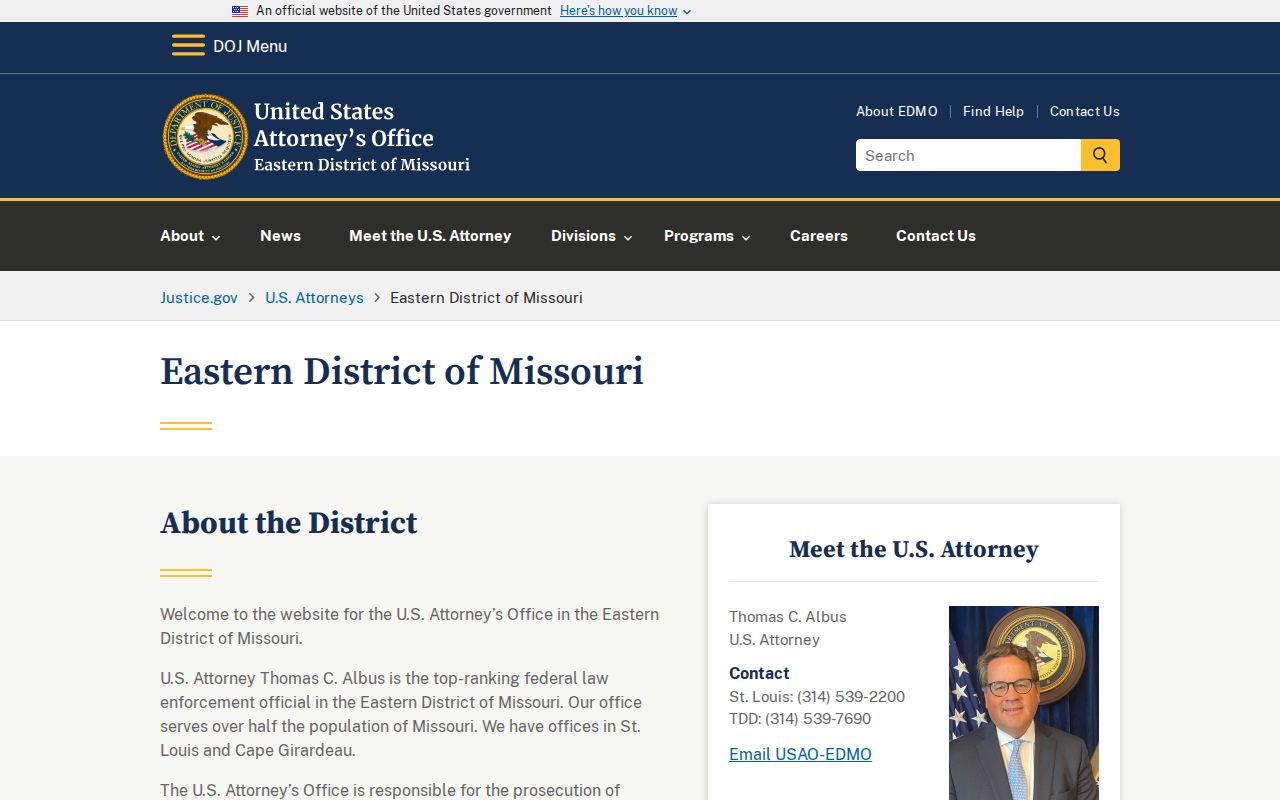
Federal warrant information does not appear as a Missouri county warrant record or an ordinary Case.net case.
The U.S. Attorney for the Western District of Missouri is the corresponding official prosecution source for the other federal district.
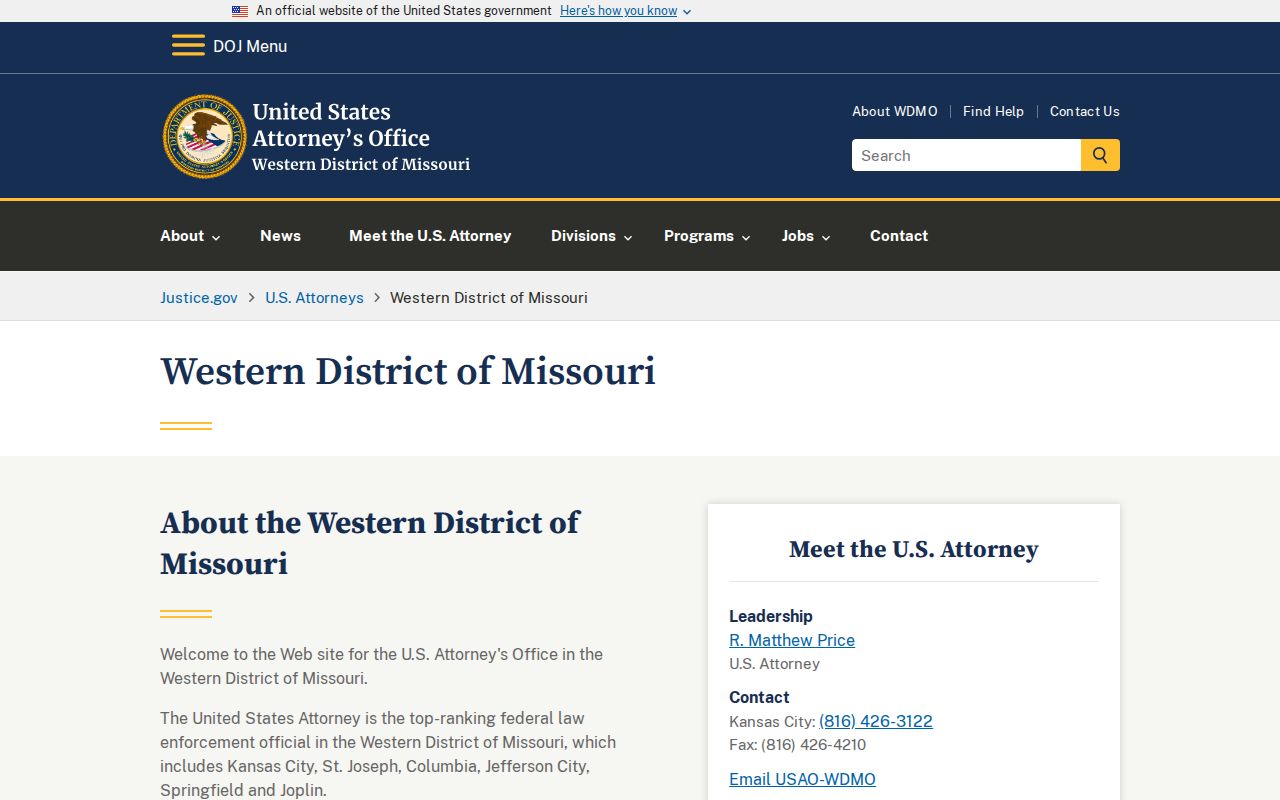
Federal and state venue must not be combined. For a Missouri state or municipal warrant, return to the issuing clerk and local warrants unit for confirmation.